Zygaena afghana: Involuntary Departure from Afghanistan
Site-specific Illuminated Wall Installation: je 198 x 210 cm
(Art in Public Space)
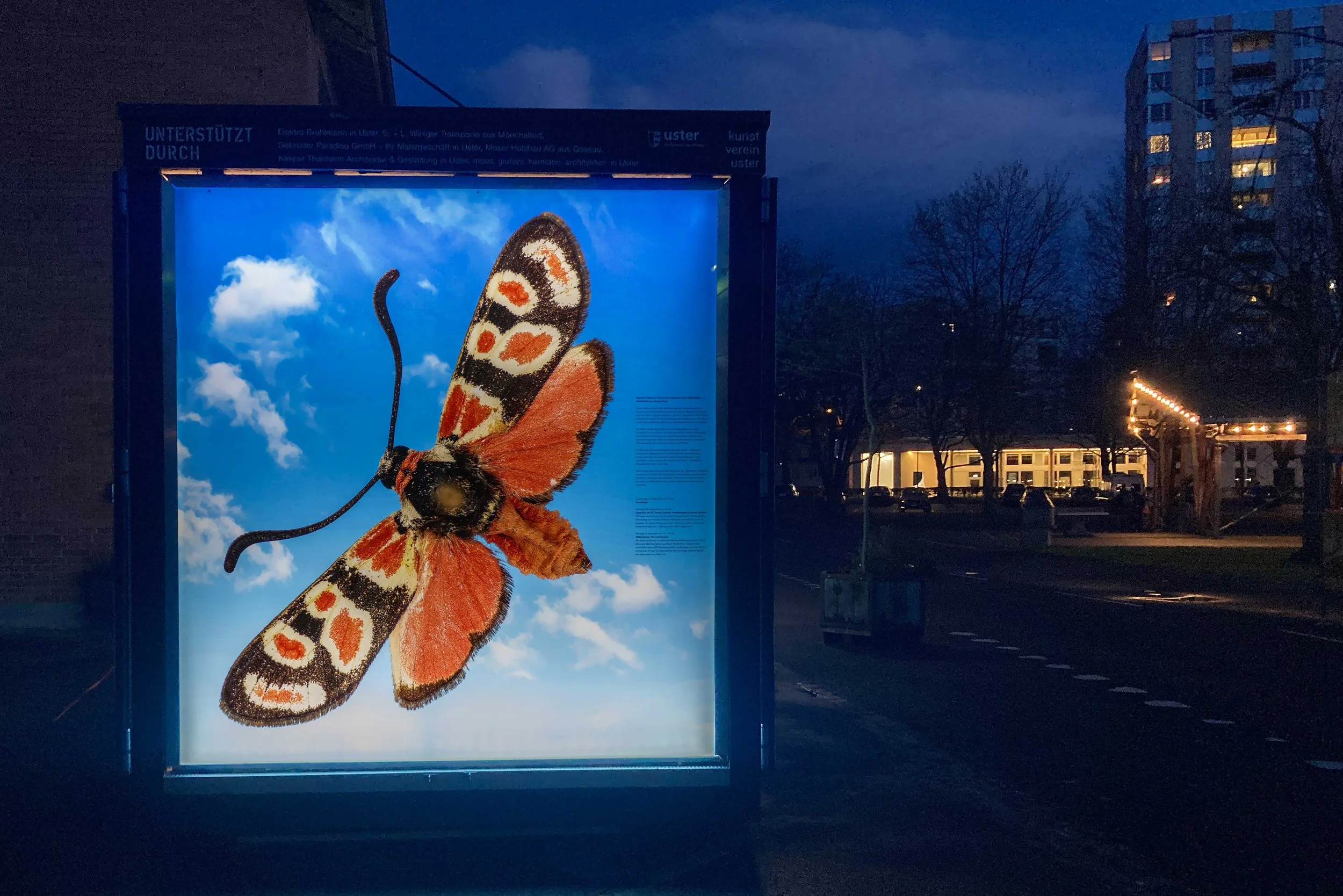
Kunstkiste Uster Nr. 61: Zygaena afghana: Involuntary Departure from Afghanistan
(Moth Photo: Christian Felsner, ETH Entomological Collection)
This work examines the interrelationships between scientific collecting, colonial history, and involuntary migration. At its center is a moth—Zygaena afghana—that was caught in Kabul on June 28, 1972, and later became part of the entomological collection at ETH Zurich. This collection is one of the most important of its kind in Europe.
The moth did not leave Afghanistan of its own free will. It symbolizes a practice in which collecting natural objects was an expression of power, possession, and control. Such collections reflect a colonial perspective: the foreign was classified, preserved, and exhibited—as a sign of status and knowledge.
One image shows the scientifically prepared insect – motionless, categorized, pinned down. A second image shows the same butterfly, this time seemingly flying freely through a blue sky – despite the pin in its body. An illusion of freedom – beyond science, back to nature.
The situation is very different today for people who are forced to leave Afghanistan. Their flight is not archived or preserved, but often overlooked, suppressed, or rejected. While an insect from Kabul is protected and cataloged, human destinies often remain invisible.
Special thanks to Dr. Michael Greeff and Christian Felsner from the ETH Zurich Entomological Collection!
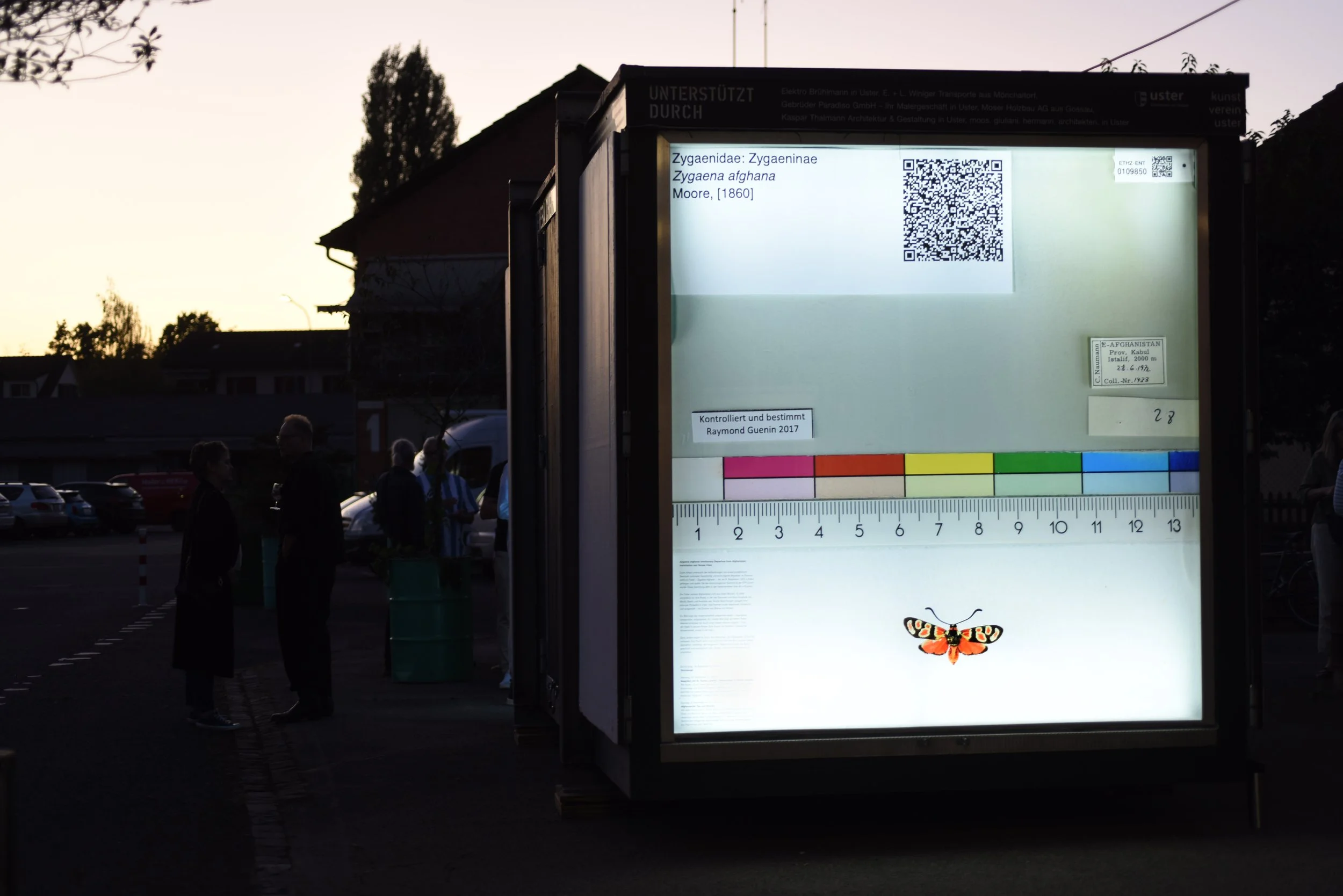
Kunstkiste Uster Nr. 61: Zygaena afghana: Involuntary Departure from Afghanistan
(Photo: ETH Zurich Entomological Collection)
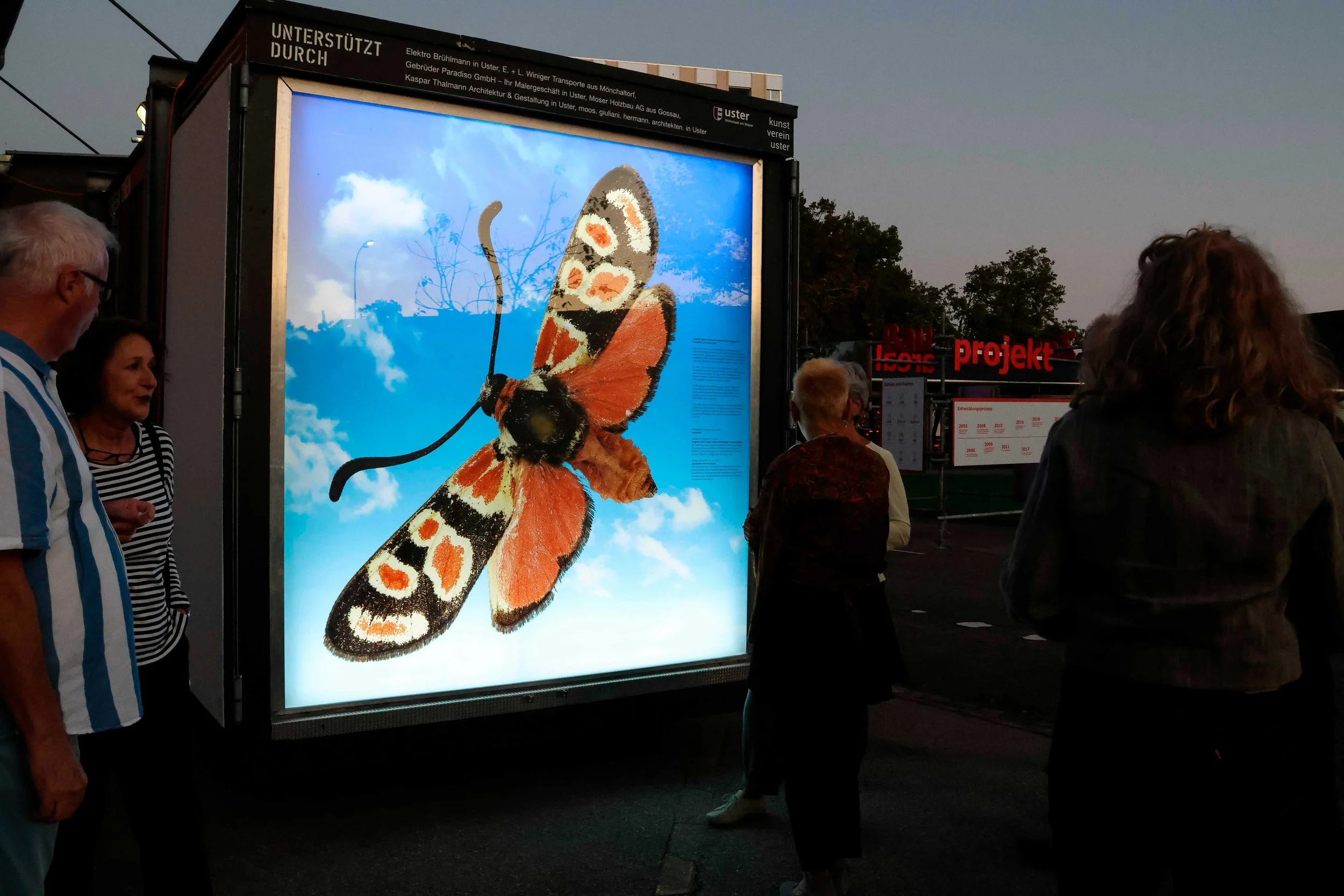
Vernissage in Uster
(Photo: Hilde Eberhard, Uster)
Associated events:
Talk with Dr. Tomas Lackner: Insect hunting in distant lands
Afghan Tea & Snacks with special Guest Berishna Temuri from Afghanistan
The akku Kunstkiste is part of Kunstverein Uster.